
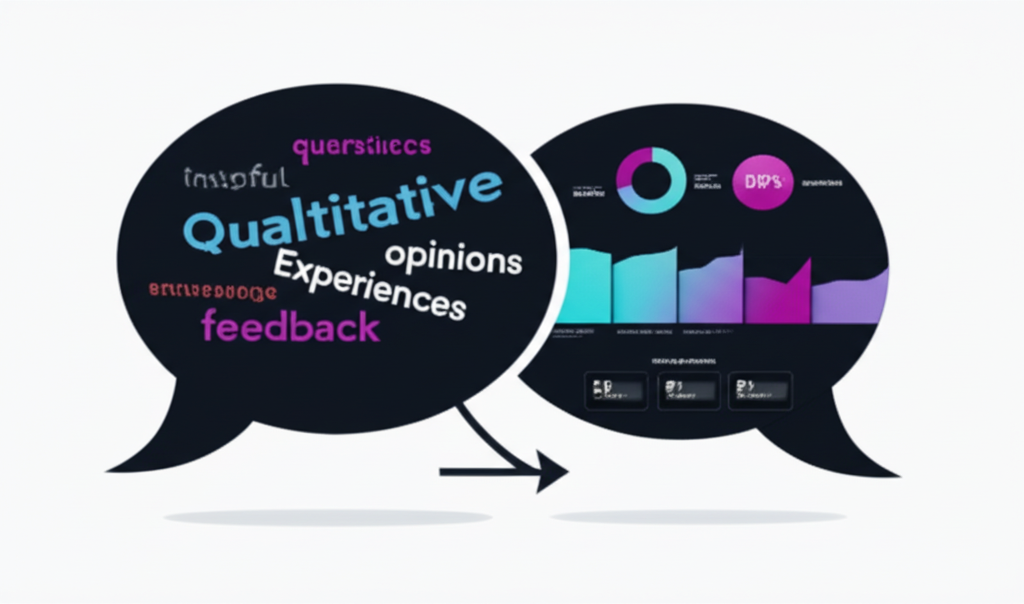
The Whole Story: Balancing Numbers and Narratives
Imagine walking through an art gallery. You see a painting, a vibrant splash of color and texture. A small plaque beside it offers some context: "Untitled #47, Oil on Canvas, 2023." That plaque gives you data – the medium, the year. But it doesn't tell you why the artist chose those colors, what emotions they were trying to evoke, or the story behind the brushstrokes. To truly understand the painting, you need more than just the data; you need the narrative.
Building products is much the same. We gather data: usage statistics, conversion rates, churn numbers. But data alone is just "Untitled #47." It tells us what is happening, but not why. To build products that resonate, we need to uncover the narratives behind the numbers. We need to understand the human stories that give those numbers meaning.
The Siren Song of Data
In the modern product world, data reigns supreme. We’re encouraged to be "data-driven," to make decisions based on measurable results. And for good reason. Data provides a level of objectivity, a way to track progress, and a means to identify problems. It’s tempting to rely solely on data, to let the numbers guide every decision.
But there's a danger in this. Data can be seductive, offering a false sense of certainty. It can lead us down rabbit holes, optimizing for metrics that don't truly reflect the user's experience. We might increase click-through rates while simultaneously eroding the overall value of our product.
Think of a news website that prioritizes clicks above all else. They might use sensationalist headlines and clickbait to drive traffic, even if it means sacrificing journalistic integrity. The numbers go up, but the user experience suffers. The relationship between the website and its readers becomes transactional, devoid of trust and meaning.
The Power of Narrative
Qualitative research – the art of gathering stories – offers a counterpoint to the cold objectivity of data. It's about listening to users, understanding their motivations, and uncovering the nuances of their experience. It's about empathy, connection, and building a deep understanding of the human beings we're building for.
Narratives provide context. They help us understand why users behave the way they do. They reveal the unspoken needs, the hidden frustrations, and the unexpected joys that shape their interaction with our product. A single user interview can uncover insights that would be impossible to glean from a spreadsheet.
Consider a fitness app that tracks users' workouts. The data might show that a significant number of users are abandoning the app after a few weeks. But why? Are they finding it too difficult? Too time-consuming? Too boring? Qualitative research – through user interviews or surveys with open-ended questions – can provide the answers. Perhaps users are feeling overwhelmed by the complexity of the app, or perhaps they're missing the social connection they get from working out with others. These are insights that data alone cannot provide.
Weaving the Two Together: A Balanced Approach
The most effective product teams understand that data and narratives are not mutually exclusive; they are complementary. The best decisions come from weaving the two together, using data to identify problems and narratives to understand them.
Here’s a practical framework for balancing numbers and narratives:
Real-World Examples
The Litmusly Advantage
Litmusly is designed to help you bridge the gap between numbers and narratives. Our AI personas think, feel, and respond like your users, allowing you to test earlier, listen deeper, and build with intention. By simulating real-world conversations and gathering qualitative feedback, Litmusly helps you uncover the stories behind the data, so you can build products that truly resonate.
An Invitation to Listen
Building great products is a journey of discovery, a conversation between you and your users. It's about listening carefully, understanding deeply, and building with empathy. Don't let the siren song of data drown out the voices of your users. Embrace the power of narrative. Seek the whole story. And build products that resonate.
What stories are your users telling you? What can you learn from listening more closely?
CEO & Founder at Litmusly. Product enthusiast with a passion for AI and user experience.